A solar smart home is not one product. It is a set of systems that can measure, schedule or control energy: solar panels, a compatible inverter, optional battery storage, a home-energy monitor, controllable loads and sometimes an electric vehicle charger or smart electrical panel.
The useful goal is not to automate everything. It is to make large loads visible, shift flexible use to better times, preserve backup energy for essential circuits and give the homeowner a clear manual override.
Start with efficiency and the load profile
Controls cannot eliminate a load that is inherently wasteful. Air sealing, insulation, efficient heating and cooling, water-heating choices and appliance condition often determine more of the bill than an app does. The U.S. Department of Energy’s Affordable Home Energy Shot focuses on reducing the cost of upgrading homes for efficiency and electrification because the building itself matters.
Before choosing hardware, collect interval data if your utility provides it. Identify peak demand, overnight base load, seasonal heating or cooling and large flexible loads such as water heating, pool equipment, laundry and EV charging.
What the main components actually do
Solar inverter
The inverter converts panel output to usable electricity and reports production. Some inverters can coordinate with a battery or provide limited backup functions, but those capabilities are model-specific. A standard grid-tied inverter normally shuts down during an outage.
Battery and backup controls
A battery can store solar or grid energy and supply selected loads later. Backup operation requires compatible isolation and transfer equipment. The DOE solar-and-storage overview explains why storage helps align variable solar production with demand; its solar-resilience guide also makes clear that resilience depends on system design, not panels alone.
Energy monitor or smart panel
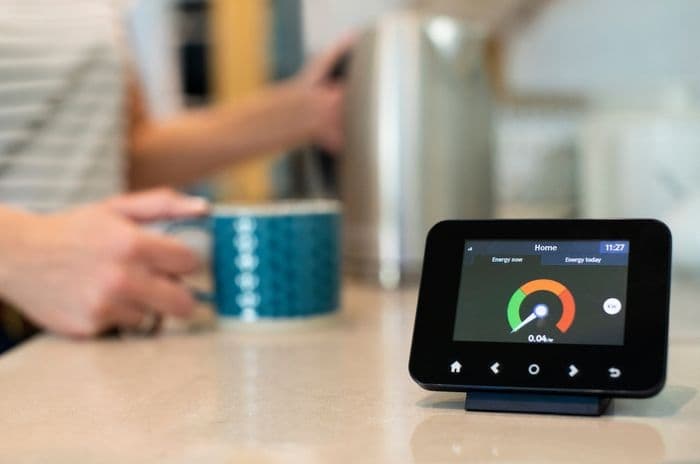
A monitor can show whole-home or circuit-level consumption. A smart panel may also shed or prioritize circuits. Verify the number of measured circuits, current limits, service compatibility, data access, internet dependence and whether essential functions still work if the vendor’s cloud service is unavailable.
Thermostats, water heaters and appliances
Controllable equipment can shift demand away from expensive or high-stress hours, but only if comfort, hot-water availability and equipment cycling remain acceptable. Excessive cycling or aggressive setbacks can undermine both savings and comfort.
EV charging
A managed charger can schedule charging for a lower-cost period or coordinate with service capacity. “Solar charging” usually means matching charging time with available production; it does not mean that every electron reaching the vehicle can be separately traced.
Three practical control strategies
- Use solar directly: Schedule flexible loads during expected production when the rate design rewards self-consumption.
- Manage peak demand: Avoid running several high-power devices simultaneously, especially under time-of-use or demand-based rates.
- Protect backup reserve: During storm risk, keep enough battery energy for the circuits and duration that matter most.
Grid-interactive buildings can adjust demand in response to grid conditions, as described in the DOE overview of grid-interactive efficient buildings. Participation, compensation and device support differ by utility program.
Compatibility questions to answer before buying
- Will the proposed inverter, battery, transfer equipment and monitoring platform work together?
- Which devices continue operating without internet or a vendor cloud?
- Can data be exported, and what happens if you change installers or utilities?
- Can the homeowner override schedules and load shedding?
- Does an upgrade require a larger service, panel replacement or utility approval?
- What is covered by each warranty, and who services the integrated system?
Avoid assuming that two products using the word “smart” can share data or controls. Ask for the exact model numbers and a written compatibility diagram.
Privacy and cybersecurity
Energy data can reveal occupancy patterns and appliance behavior. Use unique passwords, multi-factor authentication where available, current firmware and a separate network for internet-connected devices when practical. Review who receives the data, how long it is retained and whether core electrical functions depend on remote access.
How to evaluate a proposal honestly
Ask the seller to separate four values: expected utility-bill savings, backup capability, convenience and participation in a utility program. They are not interchangeable. A battery bought mainly for outage protection may not have a short financial payback; a monitor may reveal waste without directly controlling it; and automation can increase consumption if it encourages more use.
Use our home solar hub for system fundamentals, the battery backup planner for critical-load sizing and the RV solar calculator only for mobile 12-volt planning rather than a grid-connected home design.
Bottom line
The best solar smart home is understandable and serviceable. Measure the load, improve the building, choose compatible equipment, preserve manual control and document what happens during an outage or internet failure. Automation should support a clear energy goal—not become the goal itself.